Designing rail experiences at national scale where accessibility, trust and choice directly impact millions of journeys.
At Arriva UK Trains, I led UX initiatives across CrossCountry, Chiltern, and Grand Central, shaping the strategy and design of core digital products used by millions of passengers each year. My work focused on making rail travel more accessible, transparent and intuitive, turning complex booking and ticketing systems into confident digital experiences while directly supporting commercial growth and regulatory goals.

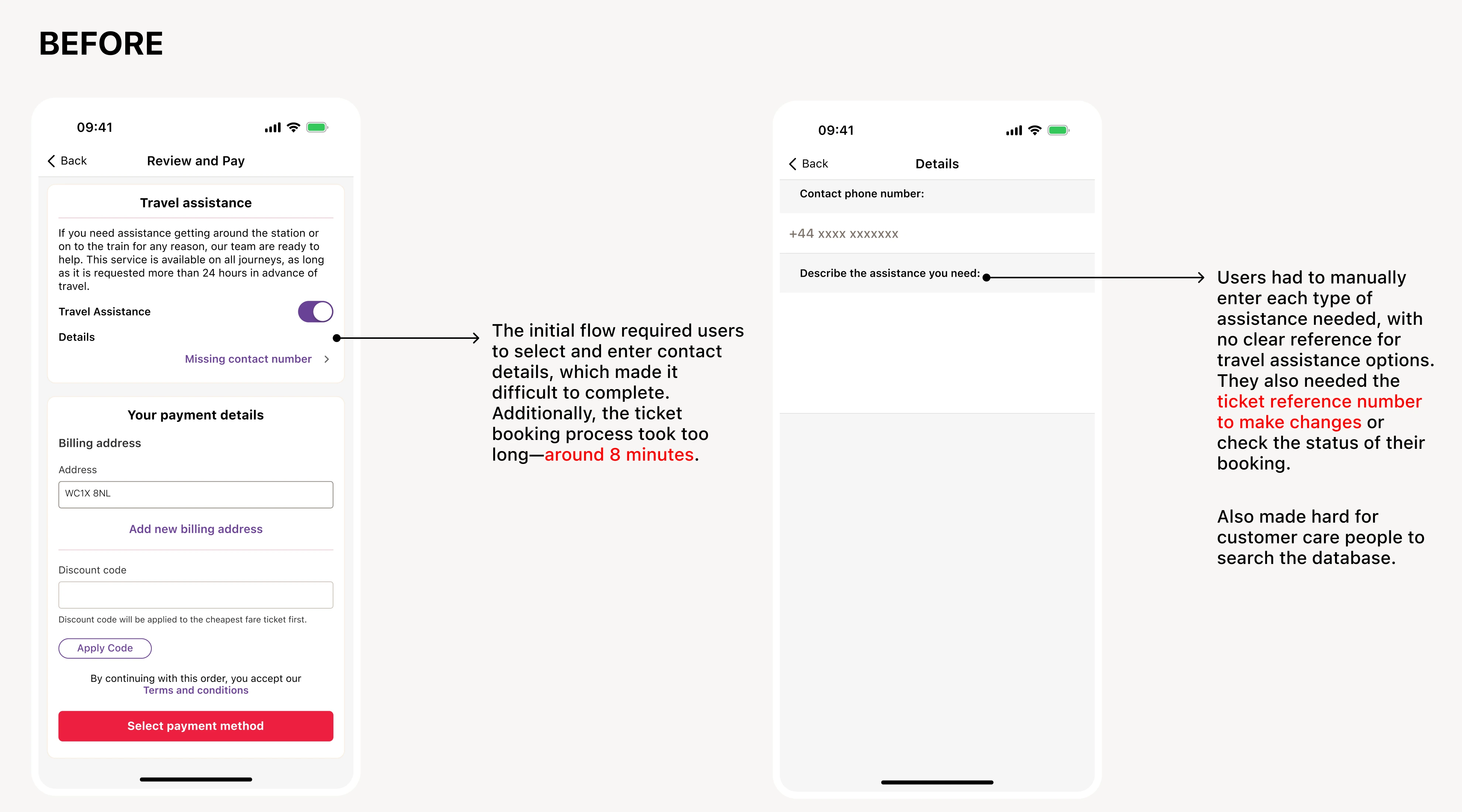
Passengers with mobility or accessibility needs faced a fragmented experience when booking rail travel. To request assistance, they often had to call contact centres, explain their requirements repeatedly and rely on manual coordination at stations. This caused uncertainty, stress and in some cases even deterred travel altogether. Arriva saw an opportunity to integrate the national Passenger Assist service directly into its digital platforms, allowing customers to book journeys and assistance in a single, seamless flow.
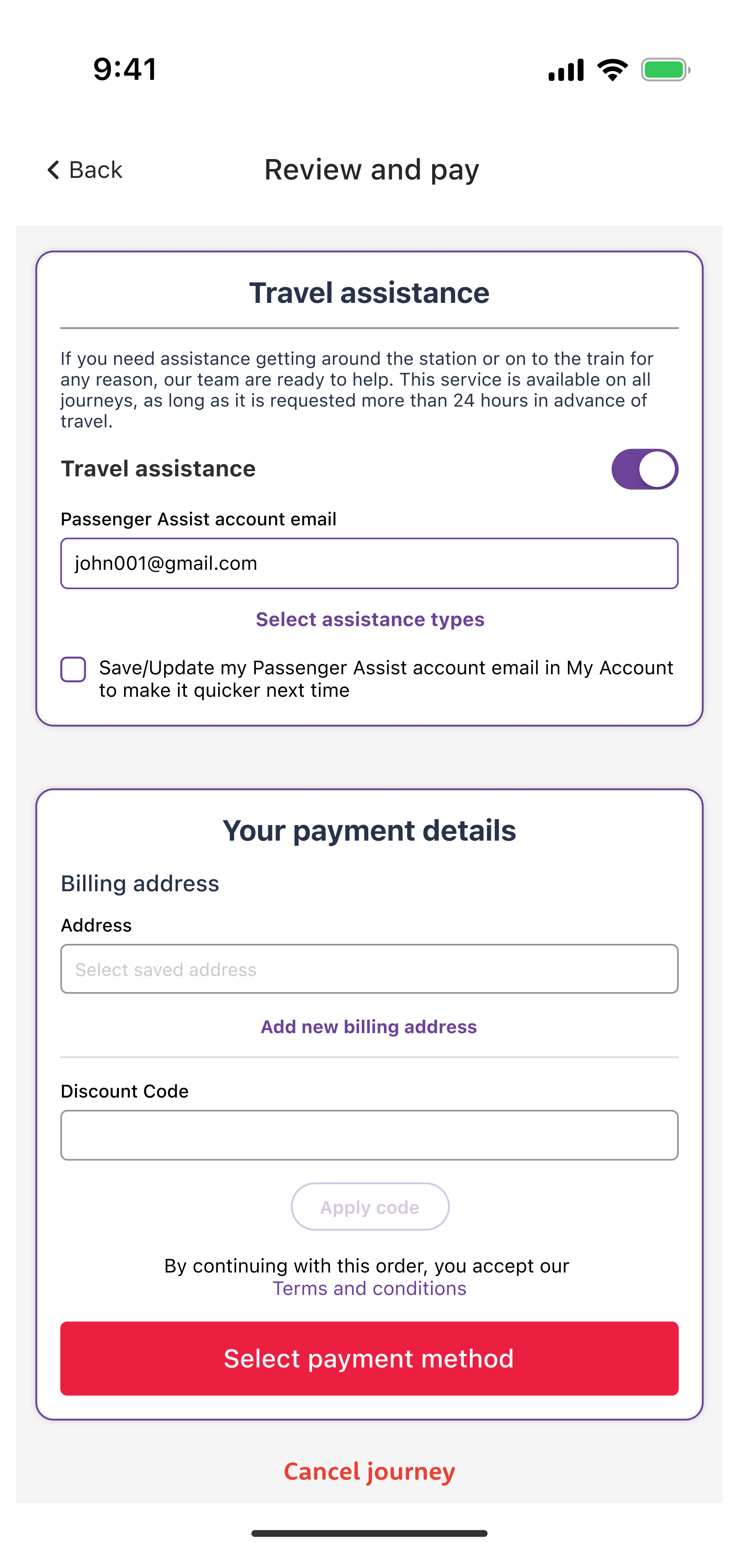
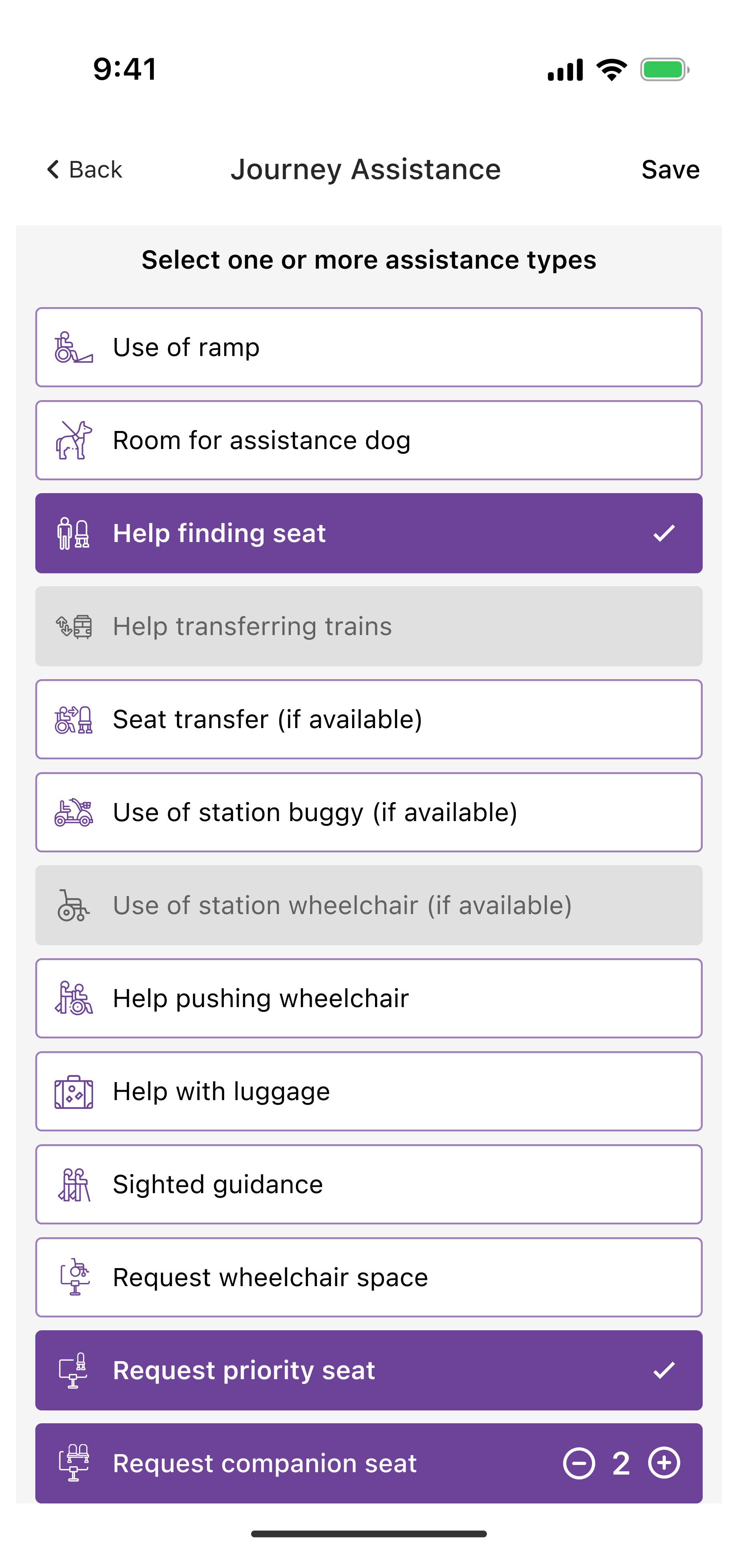
I designed a seamless “Travel Assistance” experience across web, iOS, and Android, integrating Passenger Assist directly into the booking flow. Users could link their account, specify assistance needs, and receive journey-specific validation based on station and service capabilities. The design was informed by customer service call analysis, accessibility audits, and usability testing with assisted passengers. I prioritised language clarity, resilient error states, and WCAG AA compliance to ensure the experience reduced anxiety rather than adding friction.
After launch, digital requests for assistance grew by 52%, significantly reducing dependency on phone-based bookings and lowering call centre demand. Assisted passengers reported higher confidence in planning their journeys, reflected in a 30% increase in completed assisted bookings online. Beyond the user impact, Arriva became one of the UK operators to offer fully integrated digital accessibility support, strengthening compliance with RDG inclusivity targets and positioning accessibility as a brand differentiator.


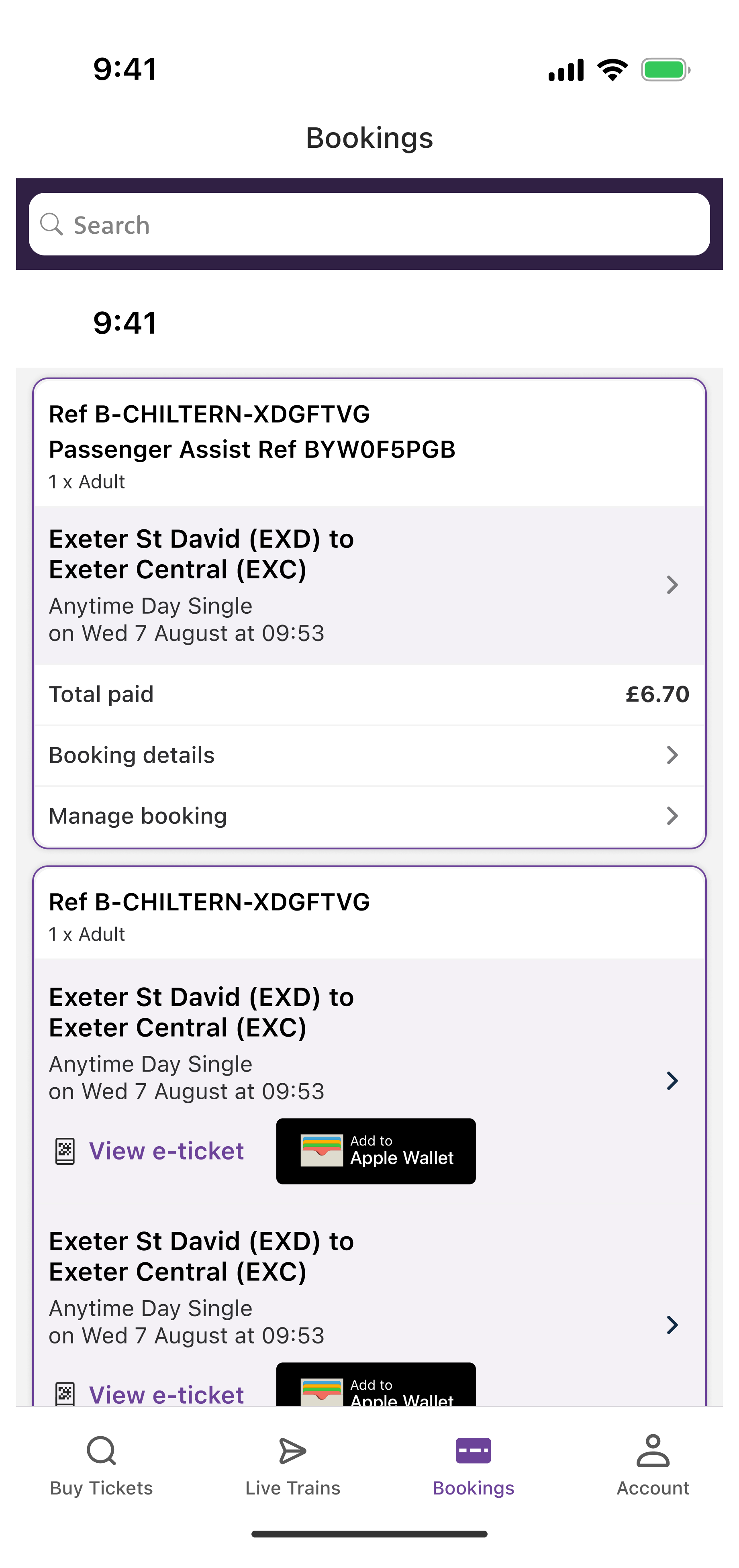
Assistance Flow
Enables passengers to request assistance during booking, removing the need for phone calls.

Assistance Types
Allows users to specify exact support needs, reducing ambiguity at stations.

Assistance Reference No
Confirms successful booking and builds confidence before travel.
Through research into fulfilment options, we identified that Season and Flexi Season ticket holders found traditional smartcards inconvenient and vulnerable to fraud. Customers wanted faster, more flexible ways to access their tickets, especially when renewing on the go. To meet these needs, we introduced sTickets a secure, app-based Season tickets delivered as time-limited barcode coupons. Unlike physical cards, sTickets are instantly available, safer to store and more resilient if a device is lost or stolen.
I redesigned the end-to-end fulfilment journey to introduce sTickets—secure, app-based Season tickets delivered as time-limited barcodes. Customers could select mobile delivery at checkout, upload a compliant photo ID, and access tickets instantly within the app. In collaboration with engineering, I shaped barcode lifecycle flows including timed validity windows, offline fallback states, and expired ticket handling. The experience was iterated through usability testing, with a strong focus on trust signals, error clarity, and reducing misuse without penalising legitimate users.
sTickets quickly became the preferred option for a growing share of Season travellers, driving higher adoption of the CrossCountry app and reducing reliance on physical smartcards. The format cut fraudulent use by double digits, simplified renewals, and reduced customer support queries about lost or delayed tickets. For passengers, it meant faster, smarter travel; for the business, it positioned CrossCountry as an early leader in mobile-first ticketing within the UK rail industry.

Delivery Options
Introduces mobile barcode tickets as a secure alternative to physical smartcards.

Digital sTicket
Shows time-limited barcode with clear validity indicators.

QR Lifecycle Management
Clearly communicates barcode validity and recovery states, reducing confusion while preventing misuse.
Passengers often felt frustrated by the lack of control over their seating. Automatically allocated seats left families and groups split up, business travellers unable to secure quiet spaces, and customers uncertain about where they’d be sitting until the very end of booking. This lack of visibility also created stress at boarding, with many passengers only discovering their seat assignments on the train. We identified the need for a visual seat selection feature that would give travellers more choice, confidence and peace of mind at the time of booking.
I led the integration of SilverRail’s seat map widget into booking flows across web and mobile. The experience allowed passengers to view, select, and amend seats for each leg of their journey, while maintaining a fast path for users who preferred automatic allocation. My focus was on responsive layouts, clear error handling for unavailable seats, and ensuring seat visibility reduced uncertainty before checkout.
65% of customers with access to seat maps chose to select their seats, driving a 22% uplift in satisfaction in post-booking surveys. The feature also supported upsell opportunities, with an estimated 8% uplift in first-class conversions when offered as part of the flow.

Many passengers found UK rail fares confusing, with multiple options for the same journey and little clarity on which ticket offered the best value. This often led to frustration, mistrust and abandoned bookings especially for complex or longer-distance trips. Passengers wanted a simple, transparent way to quickly identify the lowest fare without trial and error across multiple searches.
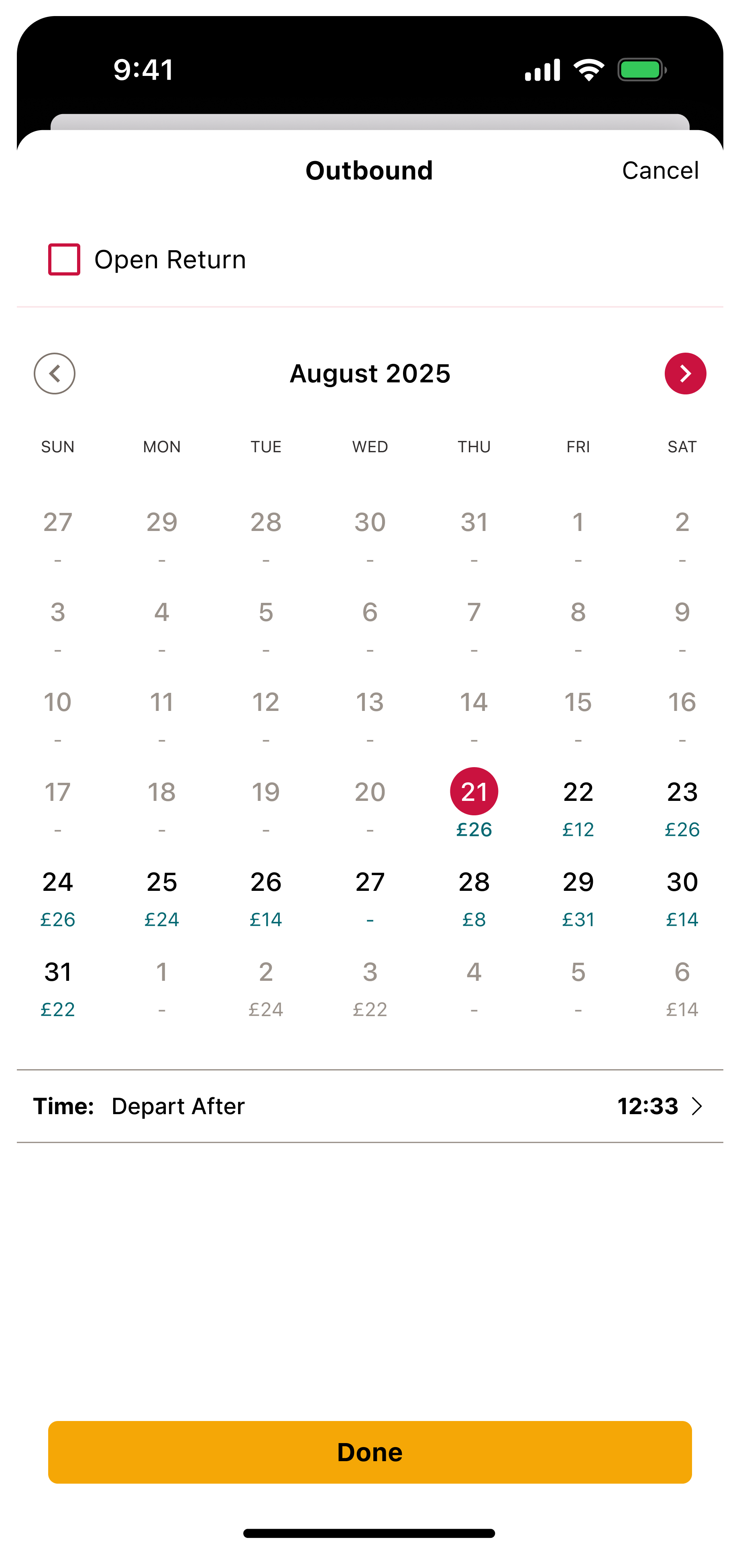
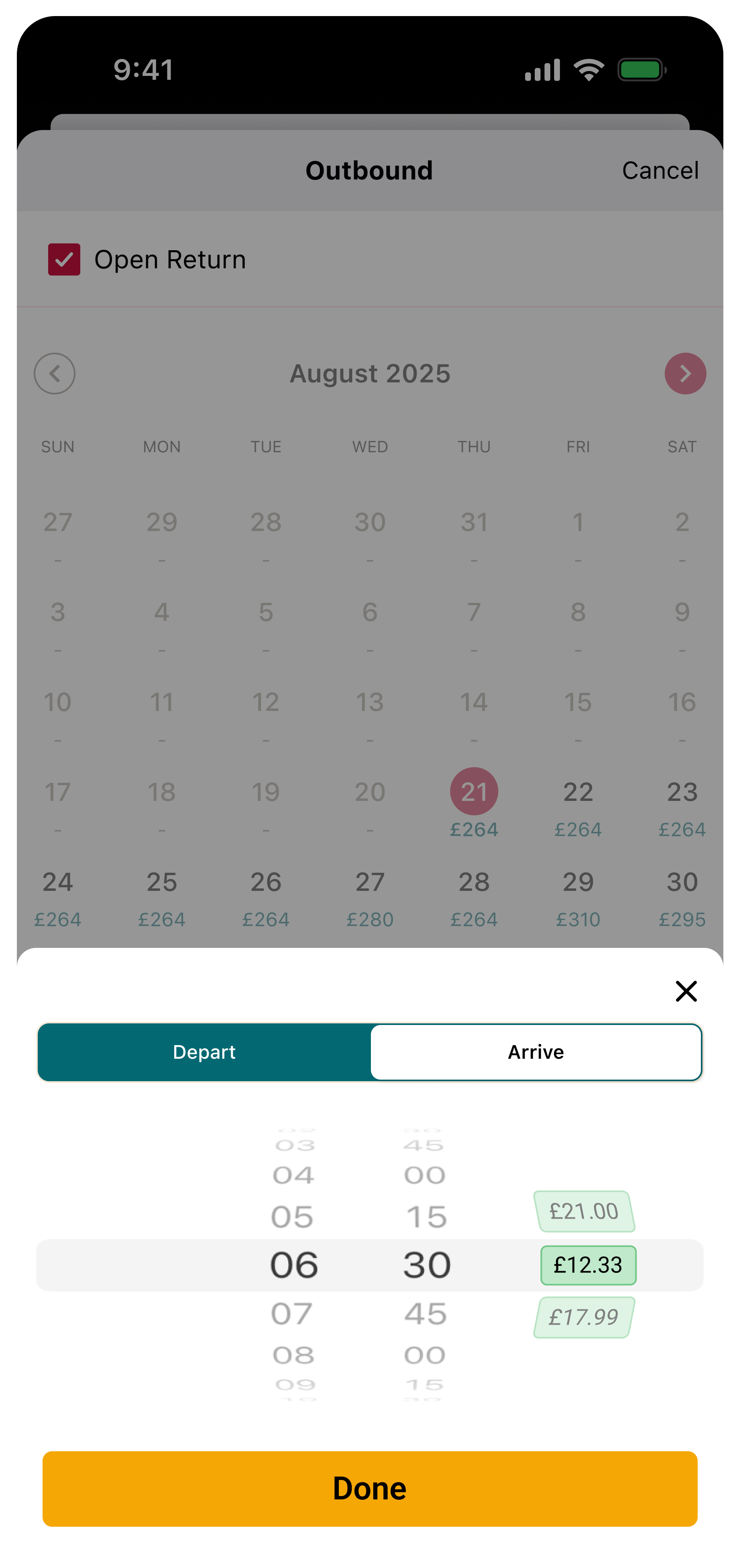
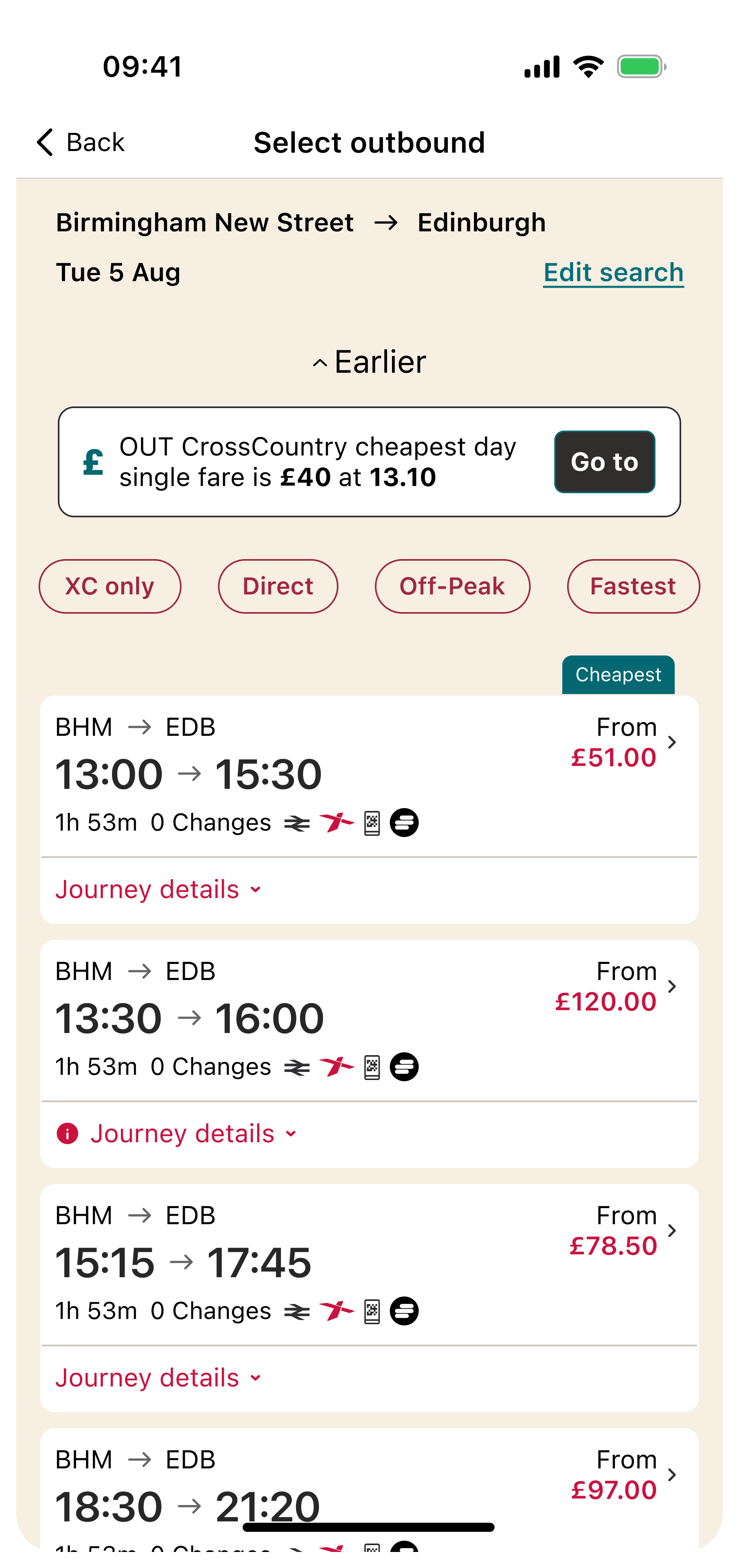
I designed the Cheapest Fare Finder to surface the best available prices directly within the booking flow. This included calendar-based views for long-term planning and time-based fare indicators for quick decision-making. Through usability testing with price-conscious travellers, we refined entry points and visual hierarchy to ensure the tool felt helpful rather than overwhelming.
The feature delivered a 6% uplift in conversion for journeys where it was available, attracted an estimated 50,000 new customers through low-fare campaigns, and reduced fare-related complaints by 30%. It positioned Arriva as a transparent, customer-first alternative in the rail market.

Fare Calendar
Surfaces the lowest fares across days to support flexible planning.

Time based Fare
Highlights the cheapest departure options at a glance.

Cheapest Tag and Banner
Draws attention to the best deals with prominent tags and banners.
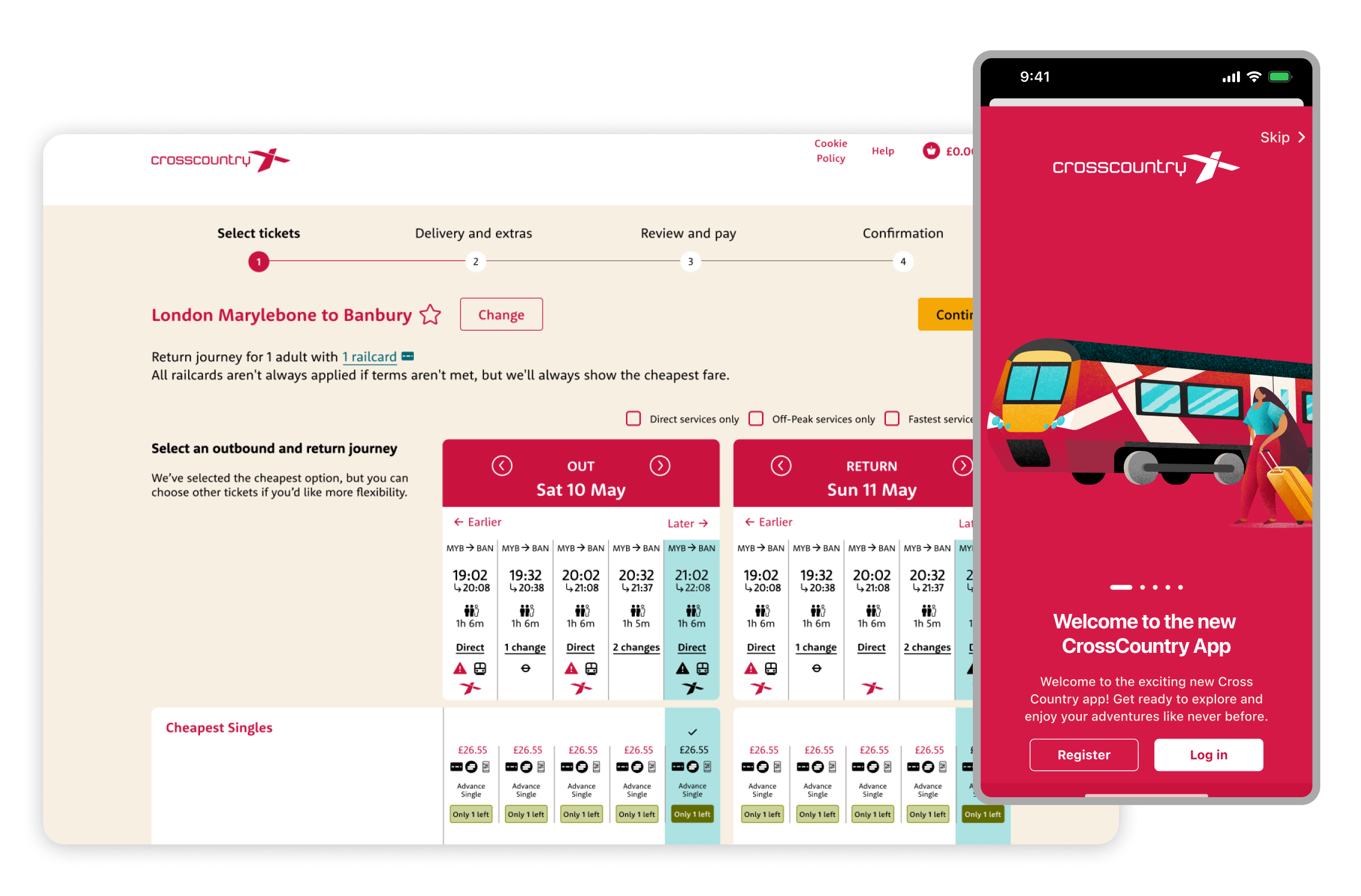
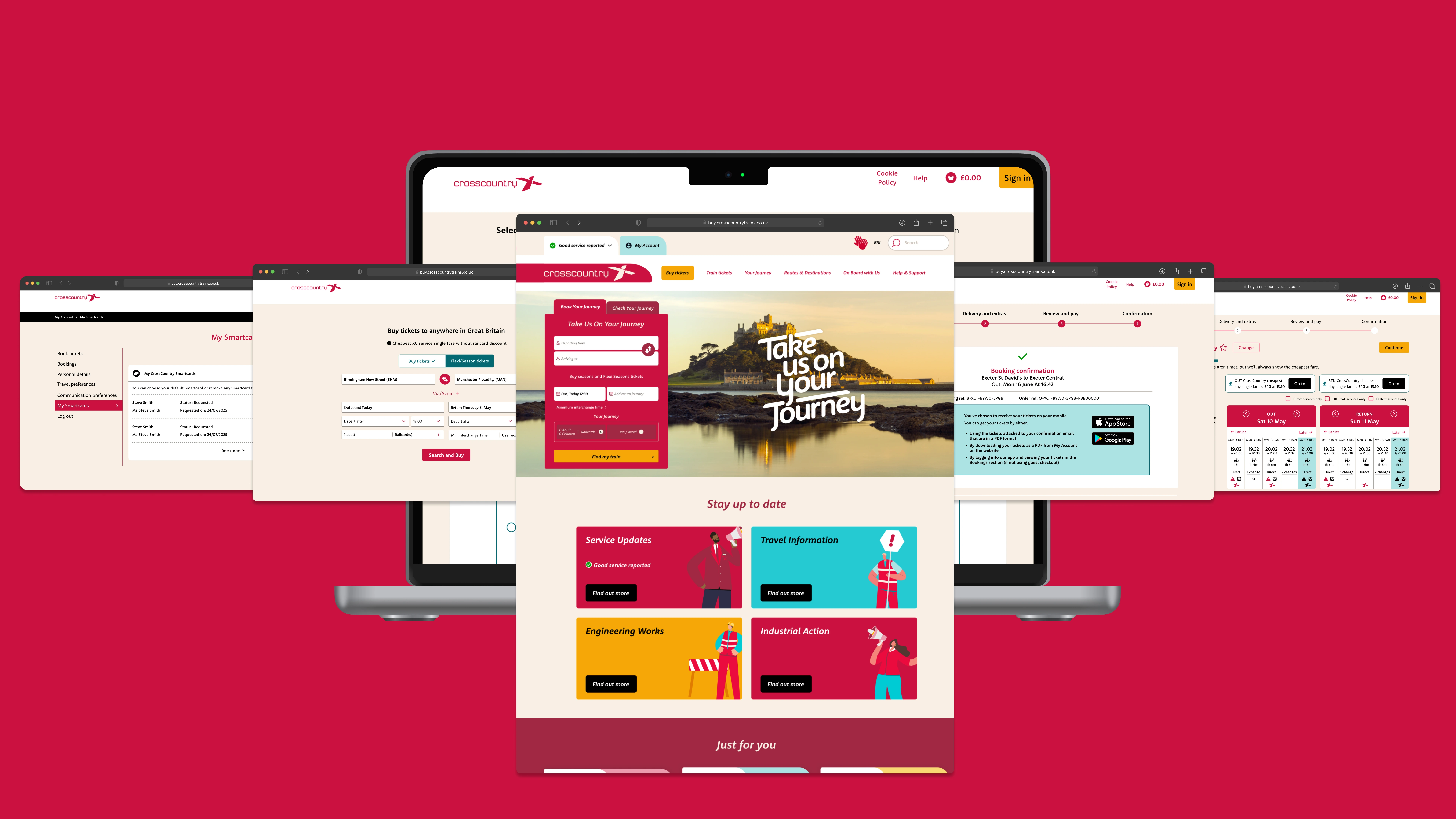
CrossCountry wanted a complete redesign of its marketing website to better reflect the brand and meet modern customer expectations. The previous site was inconsistent with the app, difficult to navigate, and under-optimised for both accessibility and search. As the primary digital touchpoint for new and returning passengers, the site needed to deliver a seamless experience, showcase new brand colours and illustrations, and integrate directly with the ACE ‘Buy Tickets’ engine to drive sales.
I led the creation of a new CrossCountry design system to unify brand expression across web and app while embedding accessibility and scalability from the outset. Over 30 reusable templates and components were designed to support journeys, campaigns, and content at scale. Navigation and content structure were reworked to prioritise booking and discovery, balancing marketing needs with commercial performance.
The redesigned site has recently launched and early signals are promising. We are currently validating performance metrics, with focus areas including organic traffic growth, bounce rate reduction and uplift in direct online bookings. The relaunch positions CrossCountry with a refreshed, modern brand presence while creating a scalable foundation for future campaigns and product integrations.

CrossCountry’s mobile apps were underperforming compared to competitors, with inconsistent design patterns, dated booking flows and mixed reviews. Improving usability and achieving feature parity with web was critical to customer growth and retention.
I helped establish a unified design system applied consistently across iOS and Android, ensuring alignment with native Apple Human Interface Guidelines and Google Material Design principles. This created a familiar, intuitive experience for users regardless of device. I redesigned the end-to-end booking flow to reduce drop-off and improve clarity. Additional enhancements included real-time journey updates, streamlined account management and redesigned notification patterns to increase engagement.
The redesigned apps have recently launched, and we are in the process of validating key performance metrics. Early signals are promising, with particular focus on improvements in app store ratings, active user growth and booking conversion rates. The relaunch positions mobile as a core revenue and engagement channel for CrossCountry, with a scalable design foundation for future iterations.