

Bridging Blockchain Complexity with Confident Creator Flows on TinyNFT
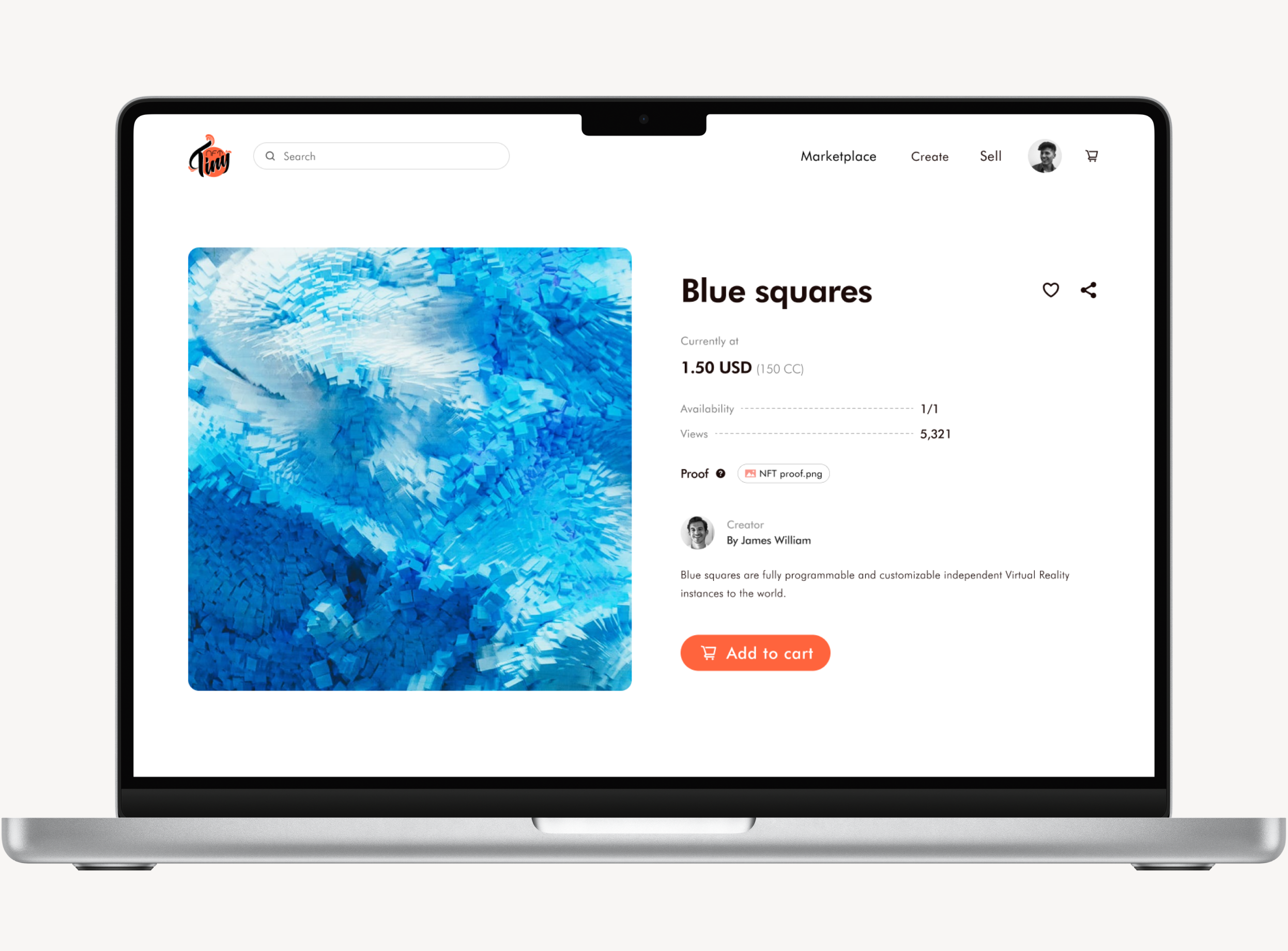
TinyNFT was an NFT marketplace built on proprietary blockchain infrastructure and its own cryptocurrency, CloudCoin. While the technology enabled faster transactions and lower fees, the product struggled with user trust, high drop-offs, and low creator adoption. I led the redesign of the core marketplace experience—focusing on NFT creation, payments, and creator tools—to reduce friction, align with user mental models, and make a decentralized system feel reliable for both first-time and experienced users.
Challenge - Platform analytics revealed significant abandonment across critical flows, particularly during NFT creation and payment. Despite strong interest from creators, the reliance on CloudCoin introduced trust barriers that caused hesitation at moments of commitment. The challenge was not feature depth or technical capability, but perception: users needed to feel confident before they were willing to create, pay, and publish on the platform.


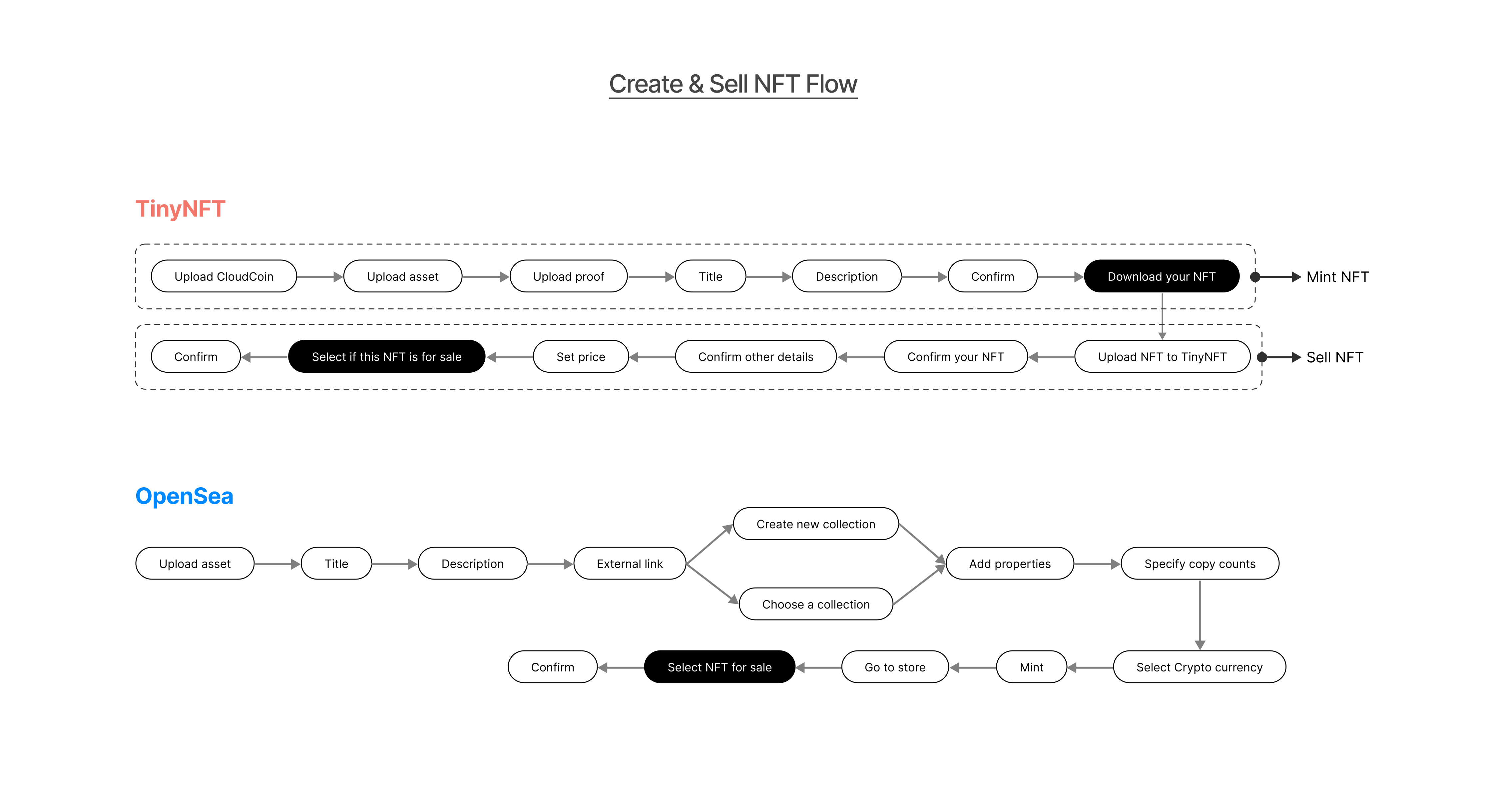
I began by conducting a heuristic evaluation of the existing TinyNFT marketplace and a comparative flow analysis against established platforms like OpenSea. Mapping the end-to-end “Create & Sell” journeys revealed that TinyNFT introduced significantly more steps, particularly around payments and authentication, before users could preview their NFT, creating early trust breakdowns.
To validate these findings, I conducted moderated usability testing with 8 experienced NFT creators and 6 first-time users. Sessions focused on creation, payment, and post-mint management. Across tests, users consistently struggled to understand cost implications, felt uneasy paying upfront, and lacked confidence in how their NFTs would be managed or promoted after minting.

Three critical breakdowns emerged consistently across testing:

Once NFTs were created, creators lacked tools to manage, promote, or scale their work, making the platform feel transactional rather than supportive.

Users were required to leave TinyNFT to purchase CloudCoin, navigate multiple authentication steps, and return to complete transactions—introducing doubt and drop-offs.

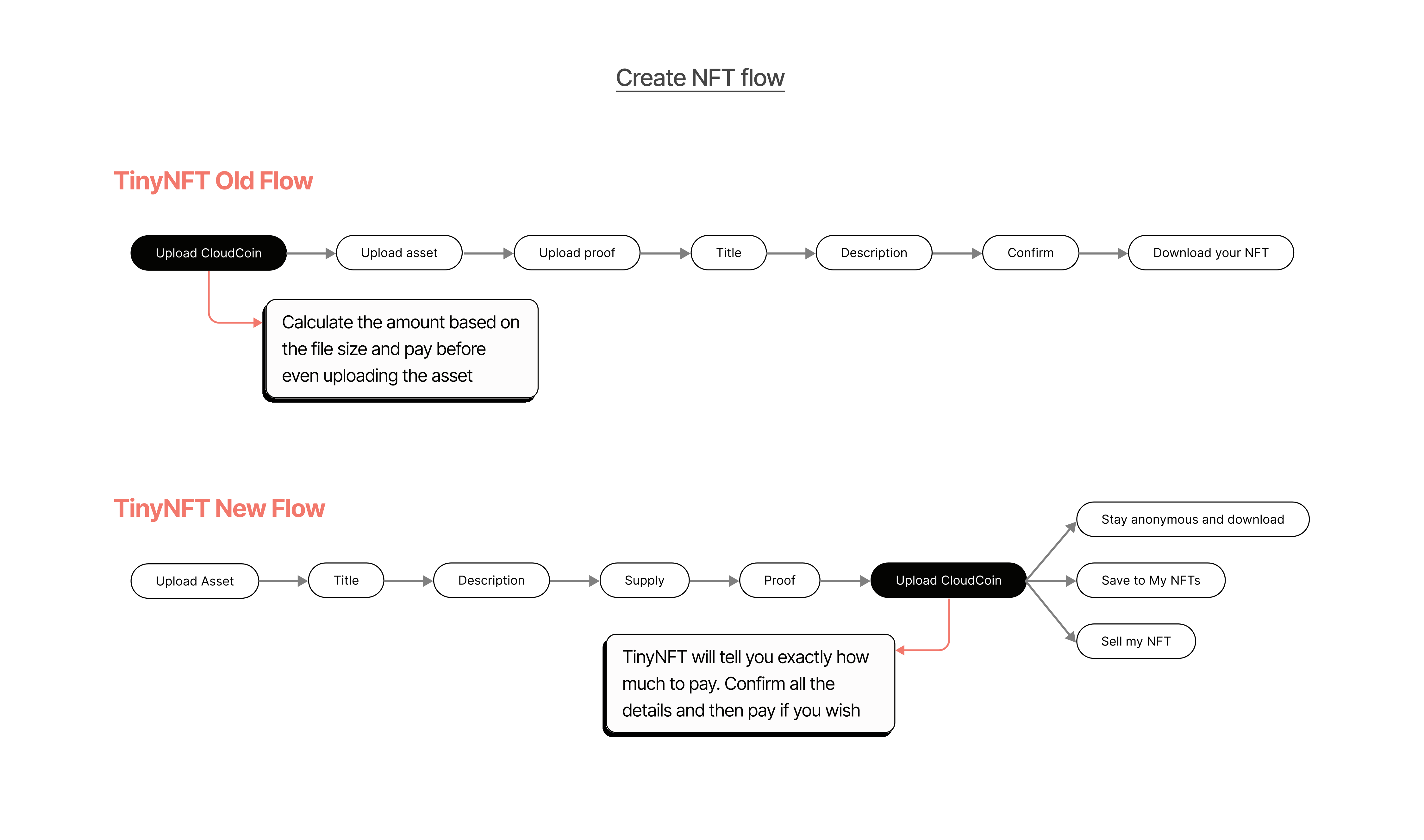
First-time creators abandoned the flow when asked to pay before uploading assets or previewing their NFT. The system felt opaque at the moment of commitment.
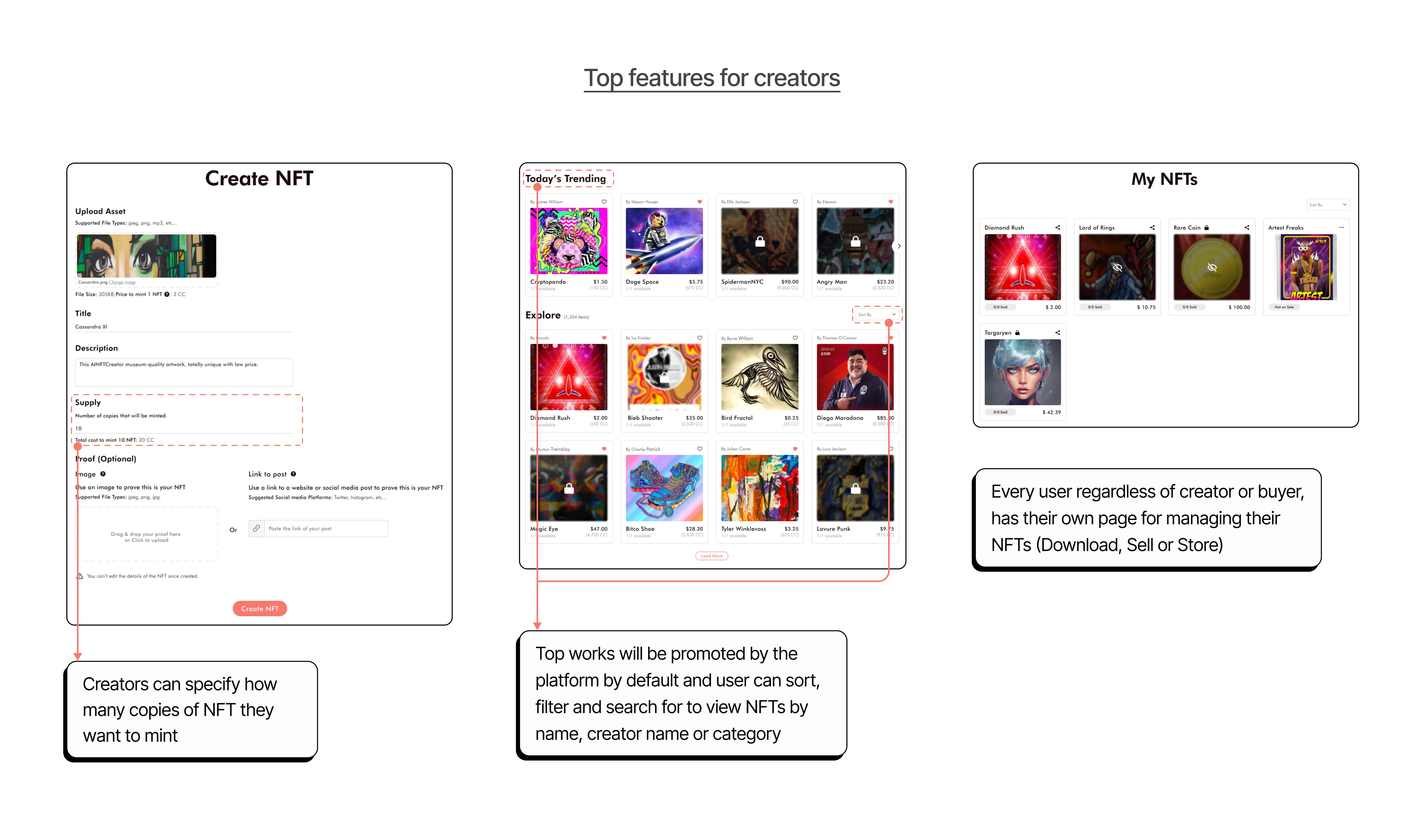
Creation alone wasn’t enough to retain creators. I designed a Creator Store that centralized NFT management and visibility, allowing creators to mint multiple copies, manage listings, and benefit from automated promotion through Trending and Latest sections.
This reframed TinyNFT as a creator-first platform, not just a minting tool.
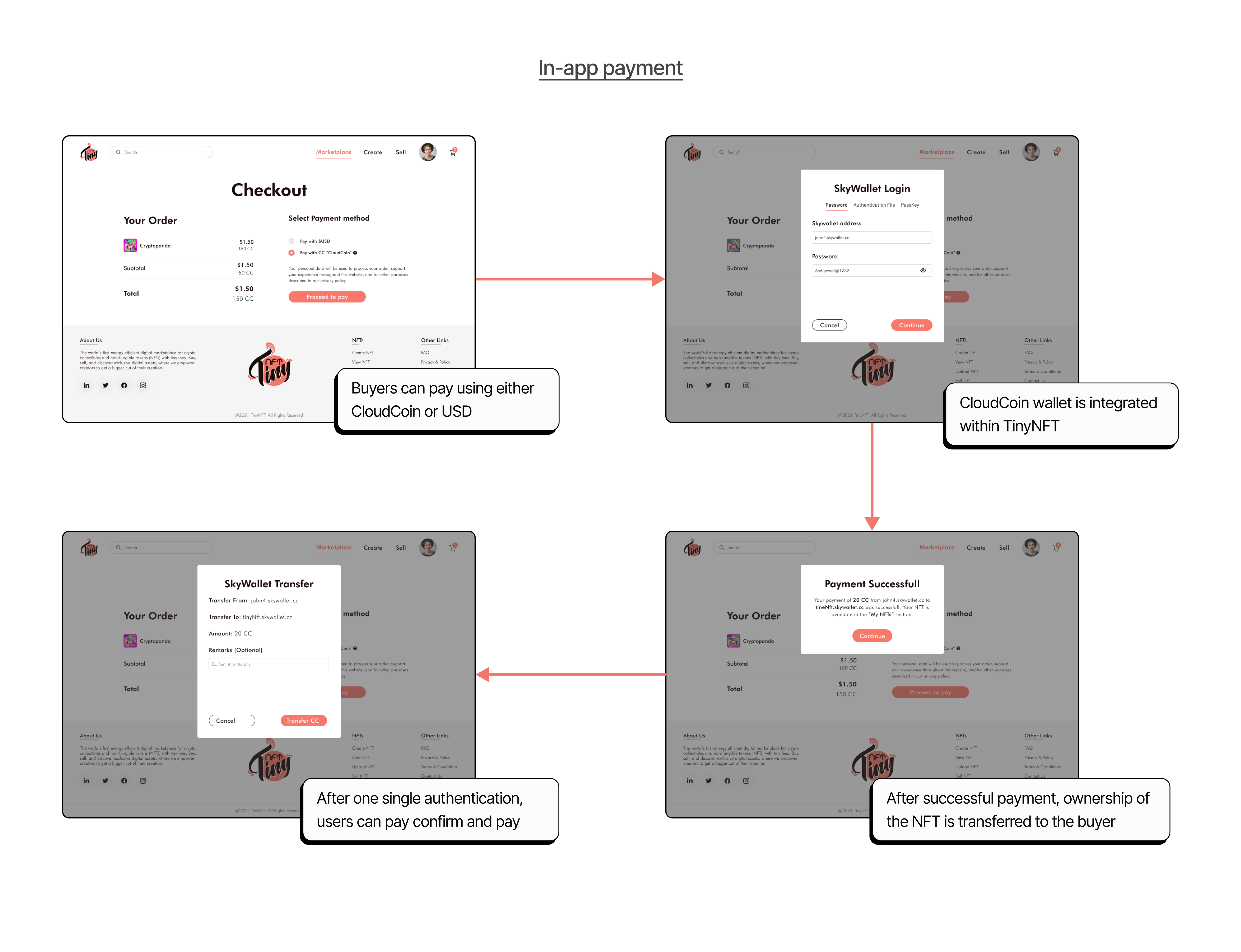
To reduce friction and restore confidence, I integrated the CloudCoin wallet directly into the TinyNFT flow. This eliminated external redirects, reduced authentication steps, and clarified transaction states.
Rather than trying to hide the blockchain, the design focused on making each step predictable and transparent, helping users feel in control throughout the transaction.
Testing revealed that upfront payment was the single largest trust barrier. I restructured the creation flow around a simple mental model: Upload → Preview → Pay. Costs were calculated only after assets were uploaded, allowing creators to review their NFT and understand pricing before committing.
This change aligned with familiar marketplace behaviors and significantly reduced hesitation among first-time creators.
In addition to the TinyNFT platform, the client requested a temporary landing page to attract NFT creators. This page facilitates the initial phase of the product launch by showcasing populated NFTs. Analysis of competitors' landing pages and their marketing campaigns informed the development of our unique selling proposition and other compelling benefits for creators. Following thorough testing, we refined the landing page to seamlessly convey the essence of TinyNFT, making it intuitive for visitors to navigate towards the platform and explore it firsthand.
Reduced to 41% (40% improvement). While still above our 35% target, the remaining friction was primarily driven by ecosystem trust factors around CloudCoin rather than the creation experience itself.
Reduced to 28%, meeting our target and validating the simplified discovery, checkout, and in-app payment flows.
Engagement from new creators increased from 12% to 28%, confirming improved clarity and positioning during launch.
This project reinforced that in decentralized products, usability is inseparable from trust. Simplifying flows improved clarity, but long-term adoption depended on confidence in the underlying ecosystem. As a designer, the challenge was knowing where design could meaningfully reduce risk—and where product strategy and system maturity needed to evolve in parallel. Designing TinyNFT strengthened my ability to shape products in complex, constraint-heavy environments where perception matters as much as functionality.


